Rhodes Old Town
Follow the cobbled Street of the Knights up to the Palace of the Grand Master, then explore the lanes and squares of the UNESCO-listed medieval town.
The Dodecanese, whose name means ‘twelve islands’, lie in the south-eastern Aegean, close to the south-west coast of Turkey. They offer long, hot summers and clear water, but also plenty of history: the medieval Old Town of Rhodes, built by the Knights of St John, the acropolis above Lindos and the ancient sites of Kos, with white villages, mountains and quiet coves in between.
TUI fly flies to Rhodes and Kos from Belgium, the Netherlands and Germany, and to Karpathos from Amsterdam, from spring to October, with no flights in winter. Rhodes is the largest island, with the most to see and the widest choice of resorts. Kos is smaller and flatter, with long sandy beaches, and Karpathos is the quietest and wildest of the three.
In the Dodecanese, TUI fly flies to Kos, Rhodes and Karpathos. The flights leave from Amsterdam, Hanover and Brussels.
Rhodes, the largest of the Dodecanese, combines a medieval capital with busy resorts on the east coast, the white village of Lindos and quieter beaches further south. Kos is smaller and flatter, with long sandy beaches, cycle paths and a relaxed harbour town. Karpathos, south-west of Rhodes, is the quietest of the three: a mountainous island of traditional villages and clear coves, with far fewer large resorts.
The Knights of St John ruled Rhodes and Kos for about two centuries and left their mark on both. In the Old Town of Rhodes, a UNESCO site, you can walk the Street of the Knights to the Palace of the Grand Master, and on the rock above Lindos the ancient acropolis looks out over the sea. Kos Town has its own Castle of the Knights by the harbour, and just outside town lie the ruins of the Asklepieion, a healing sanctuary linked to Hippocrates, who was born on the island.
The clear water around the islands is ideal for swimming and snorkelling, and in summer the meltemi wind draws windsurfers and kitesurfers to Prasonisi, at the southern tip of Rhodes, and to the bays near Karpathos airport. From Kos, boat trips run to the volcanic crater of Nisyros and to Kalymnos, the island of sponge divers, while the Turkish coast is close enough for a day out: ferries sail from Kos to Bodrum and from Rhodes to Marmaris.
Follow the cobbled Street of the Knights up to the Palace of the Grand Master, then explore the lanes and squares of the UNESCO-listed medieval town.
Sail to Nisyros to walk down into its volcanic crater, or to Kalymnos, known for its sponge divers.
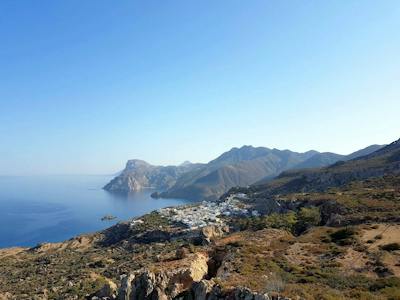
Head up to the mountain village in the north of Karpathos, where windmills stand along the ridge and some older women still wear traditional dress.
 CoolCoolCoolCool
 Warm
 HotHotHotHotWarmCoolCool

A small rocky cove on the east coast near Faliraki, named after the actor, with clear green-blue water that is good for snorkelling.
A long sandy beach on the north coast of Kos, with shallow water that suits families and the Alykes salt marsh close by.
A sandy bay on the south coast near Kefalos, with clear water, sunbeds and water sports.
A sand and pebble cove on the east coast, framed by pine-covered slopes and reached by road or by boat from Pigadia, the island's main town.

The main shopping street of the Old Town, climbing from the harbour end towards the Mosque of Suleiman, with jewellery, leather and souvenir shops.
The Nea Agora, a large many-sided building by Mandraki Harbour in Rhodes Town, with cafés, snack bars and small shops around its inner courtyard.
A mountain village on the slopes of Mount Dikaios, where small shops sell local honey, herbs, spices and olive oil.
Kos Town's central square, home to the Archaeological Museum and an old market hall where stalls sell fruit, honey, spices and souvenirs.

A resort on the east coast, south of Rhodes Town, known for its bars and clubs that stay open late in summer.
Bars on the flat roofs of the village's white houses, where you can have an evening drink with a view of the acropolis.
A resort on the south coast of Kos, known for the bars and clubs along its seafront and in the village centre.
Summer panigiria in villages such as Olympos, with lyra, lute and tsambouna bagpipe music and dancing late into the night.

Rhodes' chickpea fritters, flavoured with onion, tomato and herbs and often served as a starter.
A bar of sesame seeds and honey, often with almonds and orange, traditionally handed out at weddings and christenings on Rhodes.
A local cheese from Kos, ripened in red wine, which gives its rind a purple colour.
Handmade pasta from Karpathos, served with onions fried in butter and local cheese.
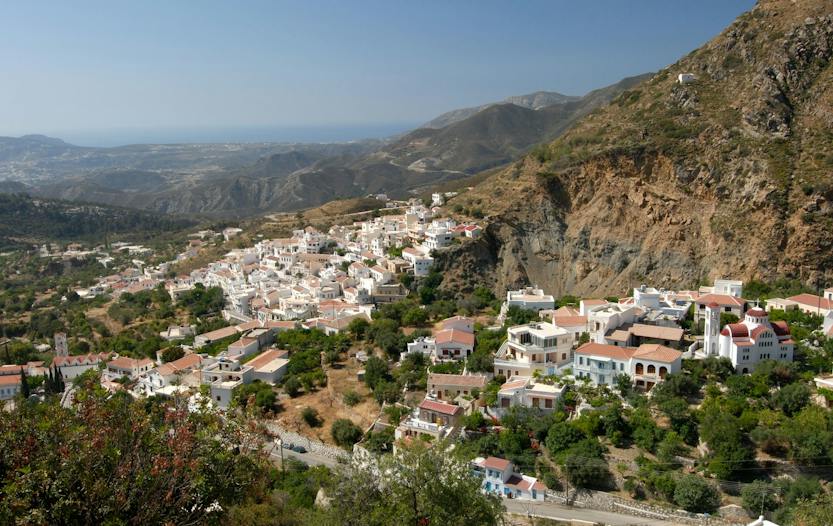
Medieval walls, ancient sites, sandy beaches and quiet mountain villages: the Dodecanese are about three to three and a half hours away with TUI fly. Book your flight to Rhodes, Kos or Karpathos for the season from spring to October and start planning your trip.
View flights to the DodecaneseFrom Belgium, TUI fly flies to Rhodes from Brussels (April to October) and Ostend (May to September), and to Kos from Brussels (April to October). From the Netherlands, there are flights to Rhodes and Kos from Amsterdam and Eindhoven (April to October) and to Karpathos from Amsterdam (April or May to October). From Germany, TUIfly flies to Rhodes from Düsseldorf, Frankfurt, Hanover, Munich and Stuttgart from March to October, and to Kos from the same airports from April to October (from March from Hanover and Munich). The flight takes about three and a half hours from Brussels or Amsterdam and about three hours from Germany, and there are no TUI fly flights to the Dodecanese in winter.
The Dodecanese are part of Greece, so the currency is the euro (€). Cards are accepted in most hotels, shops and restaurants, but it is handy to carry some cash for small tavernas, village cafés and beach kiosks.
Rhodes, served from the most TUI fly airports, suits most holidays: the medieval Old Town, the white village and acropolis of Lindos, lively resorts such as Faliraki and quieter beaches in the south. Kos is smaller and flatter, with long sandy beaches such as Tigaki and Paradise Beach, easy cycling and boat trips to Nisyros and Kalymnos. Karpathos, served from Amsterdam, is the quietest and wildest of the three, with the mountain village of Olympos, far fewer large resorts and clear-water beaches such as Apella and Diakofti. Choose it if you want to get away from the crowds.
TUI fly flies to the Dodecanese from spring to October, which is also the best time to go. May, June, September and October are warm but not too hot, with highs of around 23 to 27°C, and suit sightseeing and walking. July and August are the hottest months, at around 30°C, and the best time for the beach, with the meltemi wind often taking the edge off the heat. April is milder, at around 19°C, and quieter, and some flights from Germany start as early as March, when highs are around 16°C.
Rhodes airport is about 15 km south-west of Rhodes Town, near Ialysos, and Kos airport lies in the middle of the island, about 25 km from Kos Town; buses and taxis run from both. Karpathos airport is in the south of the island, and a hire car is the easiest way to explore its mountain roads. Greek is the main language, English is widely spoken in hotels and resorts, and the islands are one hour ahead of Belgium, the Netherlands and Germany. For a ferry trip to Turkey, from Kos to Bodrum or from Rhodes to Marmaris, take your passport, and check the official entry requirements before you travel.
The Dodecanese have a Mediterranean climate with hot, dry and sunny summers. Highs are around 23°C in May, 27°C in June and 30°C in July and August, then around 27°C in September and 23°C in October. In July and August the meltemi, a strong northerly wind, often blows across the islands. Winters are mild and wetter, with highs of around 13 to 15°C.